
2024 Outlander
About Mitsubishi Motors

2026: The Year of the PHEV

No items found.

Five reasons why a plug-in hybrid might be your next vehicle

The world of electrified vehicles can be confusing for a lot of people; between a battery electric vehicle (BEV), plug-in hybrid electric vehicle (PHEV), and hybrid vehicle, it’s hard to tell what would be best for them. In fact, all have their own benefits, but only one type of electrified vehicle may be the best for the majority of Canadians – those who live in a dense city, suburban enclave or even in remote rural areas.

If you’re thinking of an EV this year, but not really sure about taking the full plunge, a plug-in hybrid electric vehicle may be your perfect bridge into the world of electric driving, without going all-in on cost and the change of lifestyle. With the new year upon us, here are five reasons why a PHEV may make sense as your next vehicle.

All-Day Electric Driving

People seem obsessed with an EV’s range: the more, the better. And yet, these same people don’t even realize how comparatively little they drive each day. According to Stats Canada, the median distance to work for those who have a usual workplace in Canada is 8.7 kilometres, making up less than 20 km of a round trip. Most plug-in hybrids have an electric-only range of 50 to 90 kilometres; the 2025 Mitsubishi Outlander PHEV, for example – Canada’s best-selling plug-in hybrid – has an electric range of up to 61 km. Even factoring in going for groceries, dropping the kids off at school, and other errands, most people will find the electric-only capabilities of a PHEV more than enough each day.

All-Day Electric Driving

People seem obsessed with an EV’s range: the more, the better. And yet, these same people don’t even realize how comparatively little they drive each day. According to Stats Canada, the median distance to work for those who have a usual workplace in Canada is 8.7 kilometres, making up less than 20 km of a round trip. Most plug-in hybrids have an electric-only range of 50 to 90 kilometres; the 2025 Mitsubishi Outlander PHEV, for example – Canada’s best-selling plug-in hybrid – has an electric range of up to 61 km. Even factoring in going for groceries, dropping the kids off at school, and other errands, most people will find the electric-only capabilities of a PHEV more than enough each day.

Range Anxiety? What Range Anxiety?

But then there are the bigger drives; maybe you have a regular commute longer than most, or maybe you just want to take weekend trips to see family or spend time at the cottage. With a plug-in hybrid, you don’t have to worry about planning a route with a charger and long plug-in times along the way. After the battery is depleted, the gas engine kicks in to give you the same driving experience, short fuel fill-ups, and longer range of a gas-powered vehicle. In fact, the Mitsubishi Outlander PHEV has a total range of up to 687 km combined with its battery and 2.4L engine. And even under gasoline power, standard brake regeneration means the Outlander PHEV operates like a regular hybrid, giving you better fuel economy.

Range Anxiety? What Range Anxiety?

But then there are the bigger drives; maybe you have a regular commute longer than most, or maybe you just want to take weekend trips to see family or spend time at the cottage. With a plug-in hybrid, you don’t have to worry about planning a route with a charger and long plug-in times along the way. After the battery is depleted, the gas engine kicks in to give you the same driving experience, short fuel fill-ups, and longer range of a gas-powered vehicle. In fact, the Mitsubishi Outlander PHEV has a total range of up to 687 km combined with its battery and 2.4L engine. And even under gasoline power, standard brake regeneration means the Outlander PHEV operates like a regular hybrid, giving you better fuel economy.

Outlander PHEV vs Gas Savings Calculator

Is the Outlander PHEV worth it? Use this calculator to estimate your potential annual fuel savings when switching from a gas vehicle to a plug-in hybrid.

Outlander PHEV

Savings Calculator

3-Year Savings
$4400
Weekly
$1.11
Monthly
$120.11
Yearly
$1200
Thank you! Your submission has been received!
Oops! Something went wrong while submitting the form.
The savings calculator is a guide and not a guarantee of actual savings. Savings are calculated by the cost of your monthly trips (total km x fuel cost ÷ consumption of your vehicle), and how many of the monthly km can be driven in electric and hybrid mode, combining which shows the cost of the Outlander PHEV and the difference compared to your vehicle. Actual efficiency will vary depending on conditions, such as external elements, driving behaviours, vehicle maintenance and lithium-ion battery age.
No items found.

Charge From Home and Save

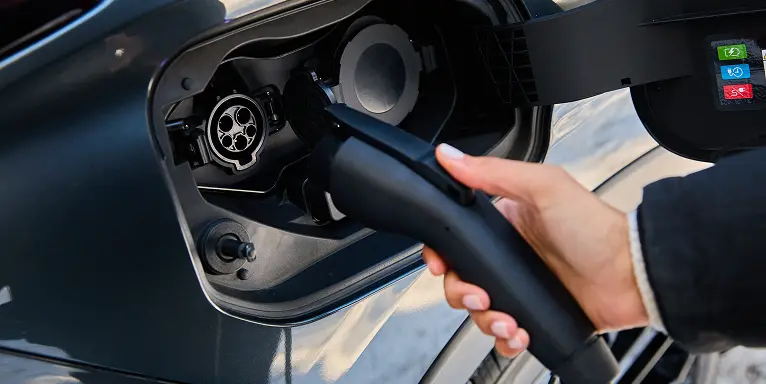
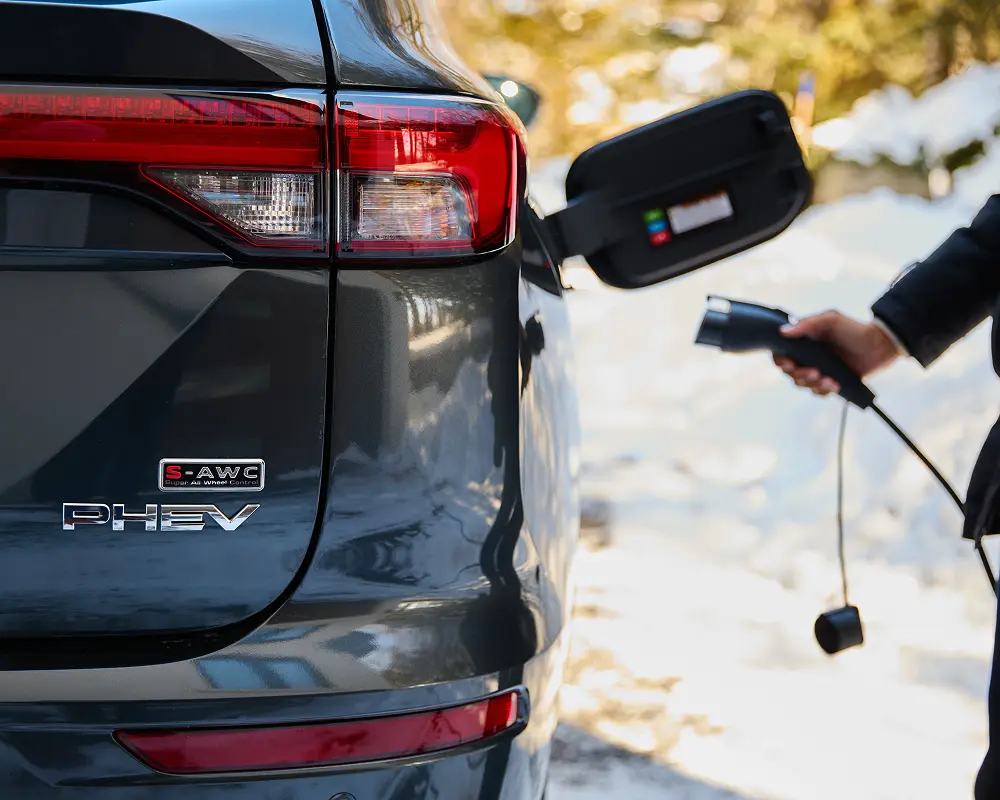
One of the biggest benefits of a plug-in electric vehicle – both battery electric and plug-in hybrid – is the ability to charge at home; with either a regular household outlet or a Level 2, 220-volt charger, you can have a full battery every morning. But it’s not just convenient: you might be shocked as to how much money you could save by charging at home with lower, off-peak electricity rates. For example, if you live in Ontario and take advantage of its Ultra-Low Overnight electricity rate of 3.9¢ per kWh, it would cost just 78¢ to fully charge the 20 kWh battery of the Outlander PHEV overnight. That’s 78¢ for up to 61 km of driving!

Charge From Home and Save

One of the biggest benefits of a plug-in electric vehicle – both battery electric and plug-in hybrid – is the ability to charge at home; with either a regular household outlet or a Level 2, 220-volt charger, you can have a full battery every morning. But it’s not just convenient: you might be shocked as to how much money you could save by charging at home with lower, off-peak electricity rates. For example, if you live in Ontario and take advantage of its Ultra-Low Overnight electricity rate of 3.9¢ per kWh, it would cost just 78¢ to fully charge the 20 kWh battery of the Outlander PHEV overnight. That’s 78¢ for up to 61 km of driving!

Your estimated annual cost of fuel is
$
1,917
(based on combined fuel economy)
How many kilometres do you drive in a year?
20000KM
1,000KM
200,000KM
Fuel cost in cents/litre
Fuel economy with gas only
Hwy
6.4
L/100km
City
5.7
L/100km
With gas and electric motors combined
Combined
6.0
L/100km

A Smaller Battery is Better for The Environment

A battery electric vehicle with a range of more than 400 km can have a large battery of 100 kWh or more; some larger vehicles even have packs of more than 200 kWh. A plug-in hybrid, on the other hand, will have a battery of around 20 kWh. That means that the same amount of critical minerals (such as lithium, cobalt, nickel, manganese, and others) that make up the battery for one BEV can be used to make batteries for four, five, or even more PHEVs. So not only will you be doing your part for the Earth by driving electric, but you’ll also be using less of its mined minerals in the process.

A Smaller Battery is Better for The Environment

A battery electric vehicle with a range of more than 400 km can have a large battery of 100 kWh or more; some larger vehicles even have packs of more than 200 kWh. A plug-in hybrid, on the other hand, will have a battery of around 20 kWh. That means that the same amount of critical minerals (such as lithium, cobalt, nickel, manganese, and others) that make up the battery for one BEV can be used to make batteries for four, five, or even more PHEVs. So not only will you be doing your part for the Earth by driving electric, but you’ll also be using less of its mined minerals in the process.

Lower Up-Front Cost

Because of its battery and added motor (or motors), a plug-in hybrid will be more expensive than a comparable, gas-only vehicle. But compared with a pure battery electric vehicle, the plug-in hybrid can be had for thousands of dollars less; that comes down to the smaller battery. And yet, most people with a plug-in hybrid would get the same benefits of electric driving as with a battery electric vehicle day to day, including that aforementioned inexpensive electricity. Some provinces also offer incentives for PHEVs to offset their initial costs, as well as those for home charging infrastructure. In the longer run, a plug-in hybrid will save you money if most of your driving is on battery power.

Lower Up-Front Cost

Because of its battery and added motor (or motors), a plug-in hybrid will be more expensive than a comparable, gas-only vehicle. But compared with a pure battery electric vehicle, the plug-in hybrid can be had for thousands of dollars less; that comes down to the smaller battery. And yet, most people with a plug-in hybrid would get the same benefits of electric driving as with a battery electric vehicle day to day, including that aforementioned inexpensive electricity. Some provinces also offer incentives for PHEVs to offset their initial costs, as well as those for home charging infrastructure. In the longer run, a plug-in hybrid will save you money if most of your driving is on battery power.

Carefully measuring the pros and cons, a plug-in hybrid electric vehicle – like the 2025 Mitsubishi Outlander PHEV – just makes the most sense for someone who wants the benefits of driving electric without the range anxiety. Between traditional gas power and hardcore battery electric vehicles, a plug-in hybrid electric vehicle is the perfect balance when it comes to cost, savings, convenience, and efficiency.

Carefully measuring the pros and cons, a plug-in hybrid electric vehicle – like the 2025 Mitsubishi Outlander PHEV – just makes the most sense for someone who wants the benefits of driving electric without the range anxiety. Between traditional gas power and hardcore battery electric vehicles, a plug-in hybrid electric vehicle is the perfect balance when it comes to cost, savings, convenience, and efficiency.

2024 Outlander
See all photos

2026: The Year of the PHEV

2024 Outlander
Gallery
About Mitsubishi Motors

2026: The Year of the PHEV

No items found.

Five reasons why a plug-in hybrid might be your next vehicle

The world of electrified vehicles can be confusing for a lot of people; between a battery electric vehicle (BEV), plug-in hybrid electric vehicle (PHEV), and hybrid vehicle, it’s hard to tell what would be best for them. In fact, all have their own benefits, but only one type of electrified vehicle may be the best for the majority of Canadians – those who live in a dense city, suburban enclave or even in remote rural areas.

If you’re thinking of an EV this year, but not really sure about taking the full plunge, a plug-in hybrid electric vehicle may be your perfect bridge into the world of electric driving, without going all-in on cost and the change of lifestyle. With the new year upon us, here are five reasons why a PHEV may make sense as your next vehicle.

No items found.

Common Questions

How much can a PHEV save on fuel costs annually in Canada?
A PHEV like the Outlander can save thousands of dollars annually in fuel costs compared to a gasoline-only SUV. Drivers who charge regularly and cover most of their commute on electricity will see the biggest savings, as the Outlander PHEV's combined fuel economy is rated at just 3.6Le/100km.
Why is 2026 being called the year of the PHEV in Canada?
PHEV sales are growing rapidly as Canadian drivers seek the efficiency of an EV without the range anxiety. The Mitsubishi Outlander PHEV leads this shift — offering 84 km of electric range for daily driving, Level 3 DC fast charging, and a petrol engine as backup for longer trips, making it a practical choice for most Canadian lifestyles.
Does the Mitsubishi Outlander PHEV qualify for government rebates in Canada?
The Mitsubishi Outlander PHEV is eligible for the federal iZEV rebate, making it one of the most financially compelling PHEV choices in Canada. Combined with available provincial rebates in BC and Quebec, buyers can significantly reduce the purchase price while gaining a vehicle capable of 84 km of electric range.

Vehicles featured in this article

No items found.